
The Unsettling Sway: Understanding and Overcoming Motion Sickness
Motion sickness, that queasy, disorienting feeling that can turn a pleasant journey into a miserable ordeal, has plagued travelers for centuries. Whether on a boat, plane, car, or even a virtual reality headset, the experience is universally unpleasant. This article delves into the complex mechanisms behind motion sickness, explores its various triggers and symptoms, and provides practical strategies for prevention and relief.
The Sensory Mismatch: The Root of the Problem
The core of motion sickness lies in a sensory conflict. Our bodies rely on a sophisticated system of sensory inputs to maintain balance and spatial orientation. These inputs come primarily from:
The Vestibular System: Your Inner Compass
Located in the inner ear, the vestibular system is a network of fluid-filled canals and otolith organs that detect head movements and gravity. It sends signals to the brain about changes in acceleration and direction.
Visual Input: What You See
Your eyes provide crucial information about your surroundings, including movement and orientation.
Proprioception: Body Position Awareness
Proprioceptors are sensory receptors in your muscles, tendons, and joints that provide information about your body’s position and movement.
Normally, these three systems work in harmony, providing a consistent picture of your body’s motion. However, when there’s a mismatch between the signals they send, the brain becomes confused, leading to motion sickness. For example, if you’re reading a book in a car, your vestibular system detects the car’s movement, but your eyes, focused on the stationary book, don’t. This sensory conflict triggers the symptoms of motion sickness.
:max_bytes(150000):strip_icc()/Verywell_Seven_Things_You_Dont_Know_About_Motion_Sickness_1192151_final-cb5ea60994734fe88734f6ea04779edc.png "image.title")
Triggers and Contributing Factors
While sensory conflict is the primary cause, several factors can increase susceptibility to motion sickness:
Mode of Transportation
Different modes of transportation present varying degrees of sensory conflict. Boats, airplanes, and cars are common culprits, but even virtual reality experiences can induce motion sickness. The unpredictable movements of a boat on rough seas are particularly challenging for the vestibular system.
Individual Susceptibility
Some people are simply more prone to motion sickness than others. Factors like age, gender, and genetics can play a role. Children between the ages of 2 and 12 are often more susceptible, while older adults tend to experience it less frequently. Women are also slightly more likely to experience motion sickness than men.
Pre-existing Conditions
Certain medical conditions, such as migraines, inner ear disorders, and anxiety disorders, can increase the risk of motion sickness. Hormonal changes, such as those associated with pregnancy, can also exacerbate symptoms.
Environmental Factors
Poor ventilation, strong odors, and high temperatures can worsen motion sickness. Confined spaces and visual distractions can also contribute to the problem.
Psychological Factors
Anxiety and fear can heighten the perception of sensory conflict, making motion sickness more likely. Anticipation of motion sickness can also trigger symptoms.
Symptoms: The Unpleasant Manifestations
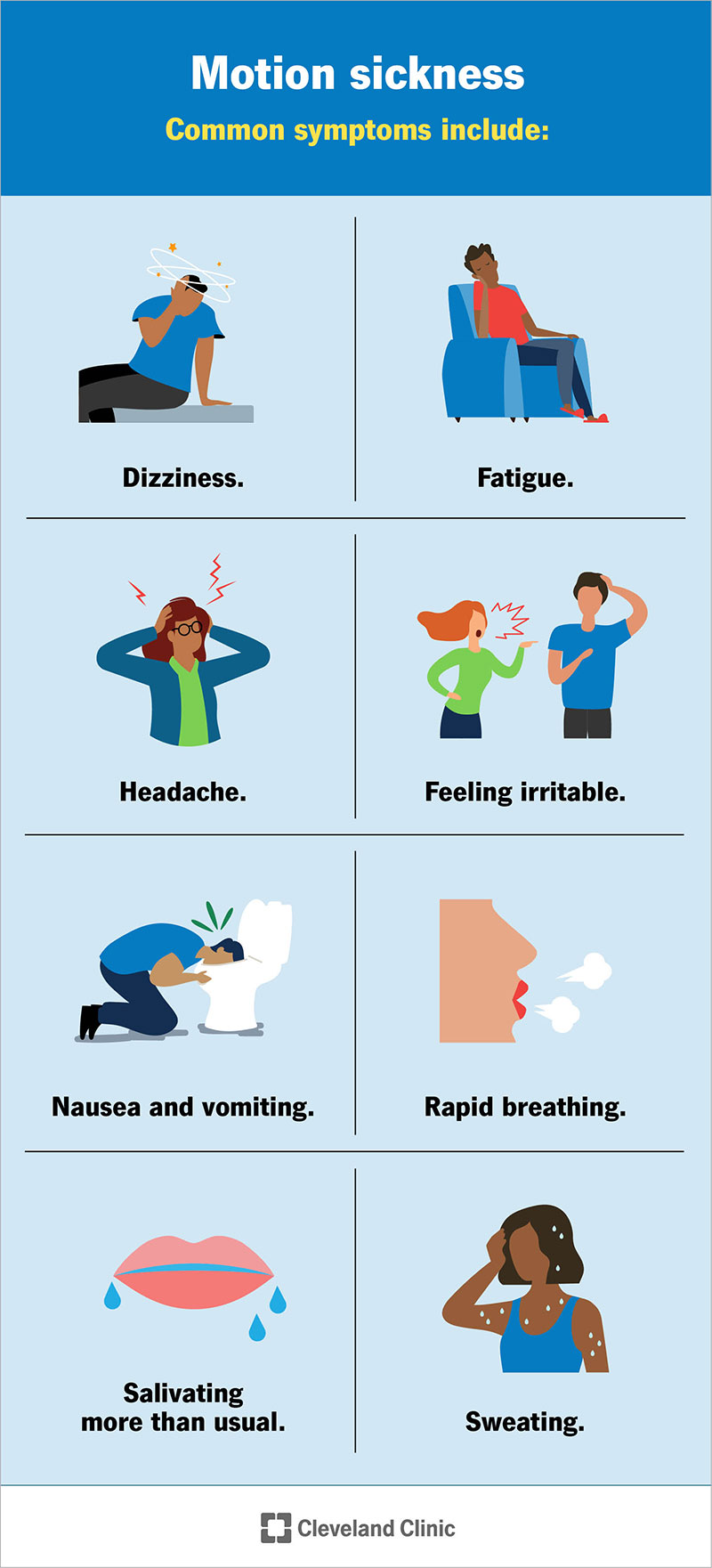
The symptoms of motion sickness can range from mild discomfort to severe nausea and vomiting. Common symptoms include:
Nausea
This is often the first and most prominent symptom. It’s a feeling of unease and discomfort in the stomach, often accompanied by a desire to vomit.
Vomiting
In more severe cases, nausea can progress to vomiting, which can provide temporary relief but can also lead to dehydration.
Dizziness and Vertigo
A feeling of lightheadedness, disorientation, and spinning can occur.
Headache
A dull or throbbing headache is a common symptom.
Pallor
The skin may become pale and clammy.
Sweating
Excessive sweating is often experienced.
Fatigue
Motion sickness can be physically and mentally exhausting.
Increased Salivation
Excess saliva production is a common precursor to nausea and vomiting.
Rapid Breathing
Changes in breathing patterns are common as the body reacts to the sensory conflict.
Prevention Strategies: Minimizing the Mismatch
The best way to deal with motion sickness is to prevent it from occurring in the first place. Here are some effective strategies:
Choose Your Seat Wisely
In a car, sit in the front passenger seat. In a boat, stay midship, where motion is minimized. In an airplane, choose a seat over the wings.
Focus on the Horizon
Looking at a stable point in the distance can help align your visual input with your vestibular system.
Avoid Reading and Screen Time
Engaging in activities that require close visual focus can exacerbate sensory conflict.
Get Fresh Air
Open a window or use a fan to improve ventilation and reduce odors.
Stay Hydrated
Drink plenty of water to prevent dehydration, especially if you experience vomiting.
Eat Light Meals
Avoid heavy, greasy, or spicy foods before and during travel. Opt for light, bland snacks like crackers or toast.
Avoid Strong Odors
Strong perfumes, cigarette smoke, and other pungent smells can worsen motion sickness.
Get Adequate Rest
Being well-rested can improve your tolerance to motion.
Manage Anxiety
Practice relaxation techniques, such as deep breathing or meditation, to reduce anxiety.
Medical Interventions: When Prevention Isn’t Enough
If preventive measures fail, several medications can help alleviate motion sickness:
Antihistamines
Over-the-counter antihistamines, such as dimenhydrinate (Dramamine) and meclizine (Bonine), can reduce nausea and dizziness. They work by blocking histamine receptors in the brain, which are involved in the vestibular system. These are best taken before travel.
Scopolamine Patches
Prescription scopolamine patches are applied behind the ear and release medication slowly over several days. They are effective for prolonged travel but can cause side effects like dry mouth and blurred vision.
Promethazine
This prescription medication is a powerful antiemetic that can be used to treat severe nausea and vomiting. It can cause drowsiness and should be used with caution.
Ginger
Ginger has natural anti-nausea properties and can be consumed in various forms, such as ginger ale, ginger candies, or ginger supplements.
Alternative Therapies: Exploring Non-Pharmaceutical Options
Some people find relief from motion sickness using alternative therapies:
Acupressure
Applying pressure to specific points on the wrist, such as the P6 (Neiguan) point, can help reduce nausea.
Aromatherapy
Certain essential oils, such as peppermint and ginger, may help alleviate nausea.
Biofeedback
This technique involves learning to control physiological responses, such as heart rate and muscle tension, which can help manage motion sickness.
Virtual Reality Motion Sickness (Cybersickness)
The increasing popularity of virtual reality (VR) has introduced a new form of motion sickness, known as cybersickness. This occurs when the visual input from the VR headset doesn’t match the vestibular input from the body.
Strategies to Reduce Cybersickness
Use VR headsets with high refresh rates and low latency.
Adapting and Overcoming
Motion sickness can be a significant challenge, but with the right strategies, it can be effectively managed. By understanding the underlying mechanisms, identifying triggers, and implementing preventive measures, individuals can minimize the impact of motion sickness and enjoy their travels. In severe cases, medical interventions and alternative therapies can provide additional relief. As technology advances and we encounter new forms of motion, ongoing research into motion sickness will continue to improve our understanding and develop more effective solutions.


