Liver failure, a severe and potentially life-threatening condition, occurs when the liver loses its ability to perform its essential functions. This complex organ, responsible for detoxification, nutrient processing, and immune regulation, can succumb to various insults, leading to a cascade of detrimental effects on the body. This article aims to provide a comprehensive overview of liver failure, encompassing its causes, symptoms, diagnosis, and management.
Understanding the Liver’s Crucial Role
The liver, the largest internal organ, plays a pivotal role in maintaining overall health. Its functions include:
Signs & Symptoms of Liver Failure, Causes, Treatments
Detoxification: Filtering harmful substances from the blood, including drugs, alcohol, and metabolic byproducts.
Nutrient Processing: Metabolizing carbohydrates, fats, and proteins, and storing essential vitamins and minerals.
Bile Production: Synthesizing bile, which aids in the digestion and absorption of fats.
Blood Clotting: Producing clotting factors essential for preventing excessive bleeding.
Immune Function: Removing bacteria and other pathogens from the bloodstream.
When the liver fails, these vital functions are compromised, leading to a buildup of toxins, impaired nutrient absorption, and increased susceptibility to infections.
Causes of Liver Failure
Liver failure can be classified as acute or chronic, depending on the speed of onset.
Liver Damage : Types, Symptoms, Causes, and Treatments
Acute Liver Failure
Acute liver failure, also known as fulminant hepatic failure, develops rapidly, often within days or weeks. Common causes include:
Drug-induced Liver Injury: Overdose of acetaminophen (paracetamol) is a leading cause. Other medications, including certain antibiotics and herbal remedies, can also cause liver damage.
Viral Hepatitis: Hepatitis B and, less commonly, hepatitis A can cause acute liver failure.
Other Infections: Infections such as cytomegalovirus, Epstein-Barr virus, and herpes simplex virus can sometimes trigger liver failure.
Toxins: Exposure to toxins such as poisonous mushrooms (Amanita phalloides) can cause severe liver damage.
Autoimmune Hepatitis: A condition in which the immune system attacks the liver.
Vascular Disorders: Conditions affecting blood flow to the liver, such as Budd-Chiari syndrome (blockage of hepatic veins).
Wilson’s Disease: A genetic disorder causing copper accumulation in the liver.
Acute Fatty Liver of Pregnancy: A rare but serious complication of pregnancy.
Chronic Liver Failure
Liver failure – Wikipedia
Chronic liver failure develops gradually over months or years, typically due to long-term liver damage. Common causes include:
Chronic Hepatitis B and C: Long-term infection with these viruses can lead to cirrhosis and liver failure.
Alcoholic Liver Disease: Excessive alcohol consumption can cause progressive liver damage.
Nonalcoholic Fatty Liver Disease (NAFLD) and Nonalcoholic Steatohepatitis (NASH): Accumulation of fat in the liver, often associated with obesity and diabetes.
Autoimmune Hepatitis: Chronic inflammation of the liver caused by the immune system.
Primary Biliary Cholangitis (PBC) and Primary Sclerosing Cholangitis (PSC): Autoimmune diseases affecting the bile ducts.
Genetic Disorders: Such as hemochromatosis (iron overload) and alpha-1-antitrypsin deficiency.
Chronic Heart Failure: Can cause congestion and damage to the liver.
Long term exposure to some medications
Symptoms of Liver Failure
The symptoms of liver failure can vary depending on the cause and severity of the condition.
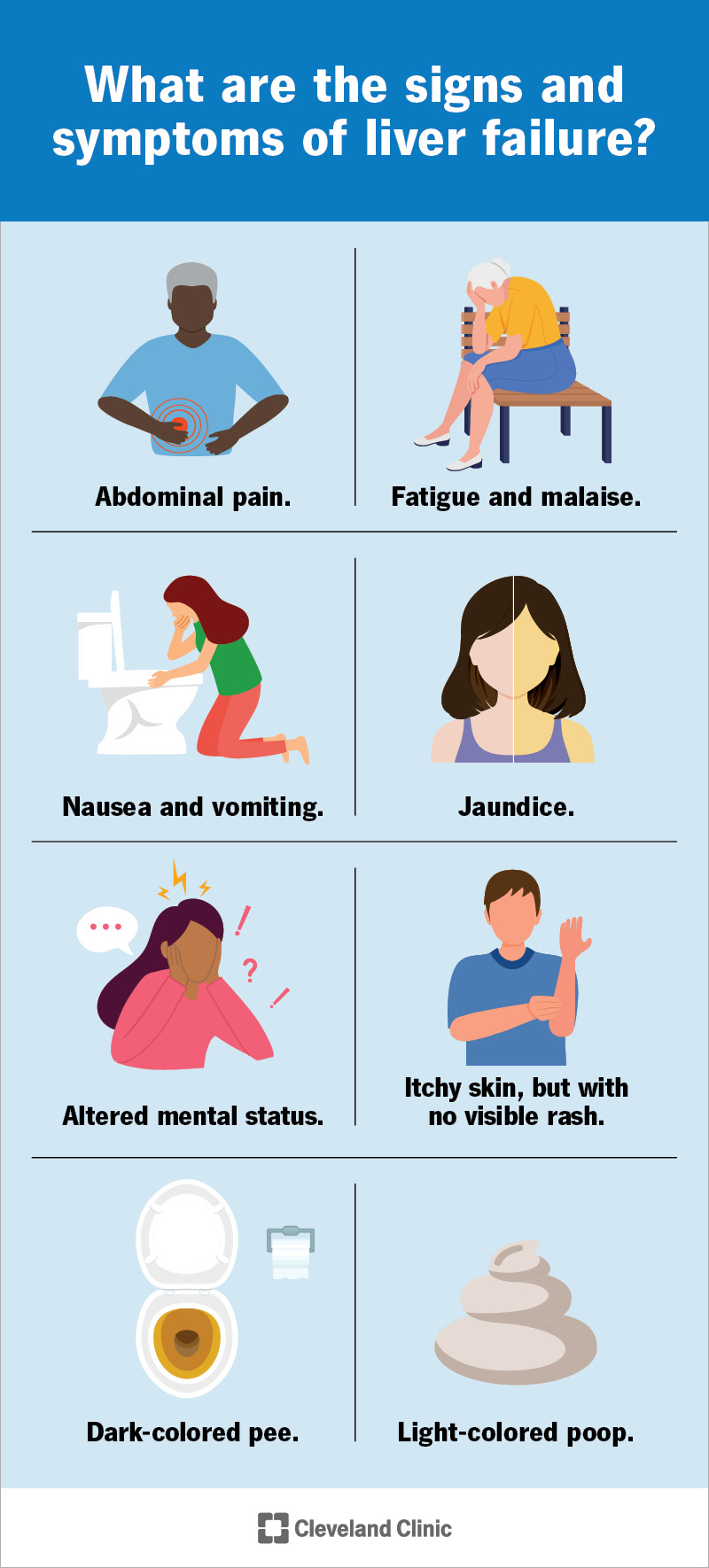
Early Symptoms
Fatigue
Weakness
Loss of appetite
Nausea and vomiting
Abdominal pain
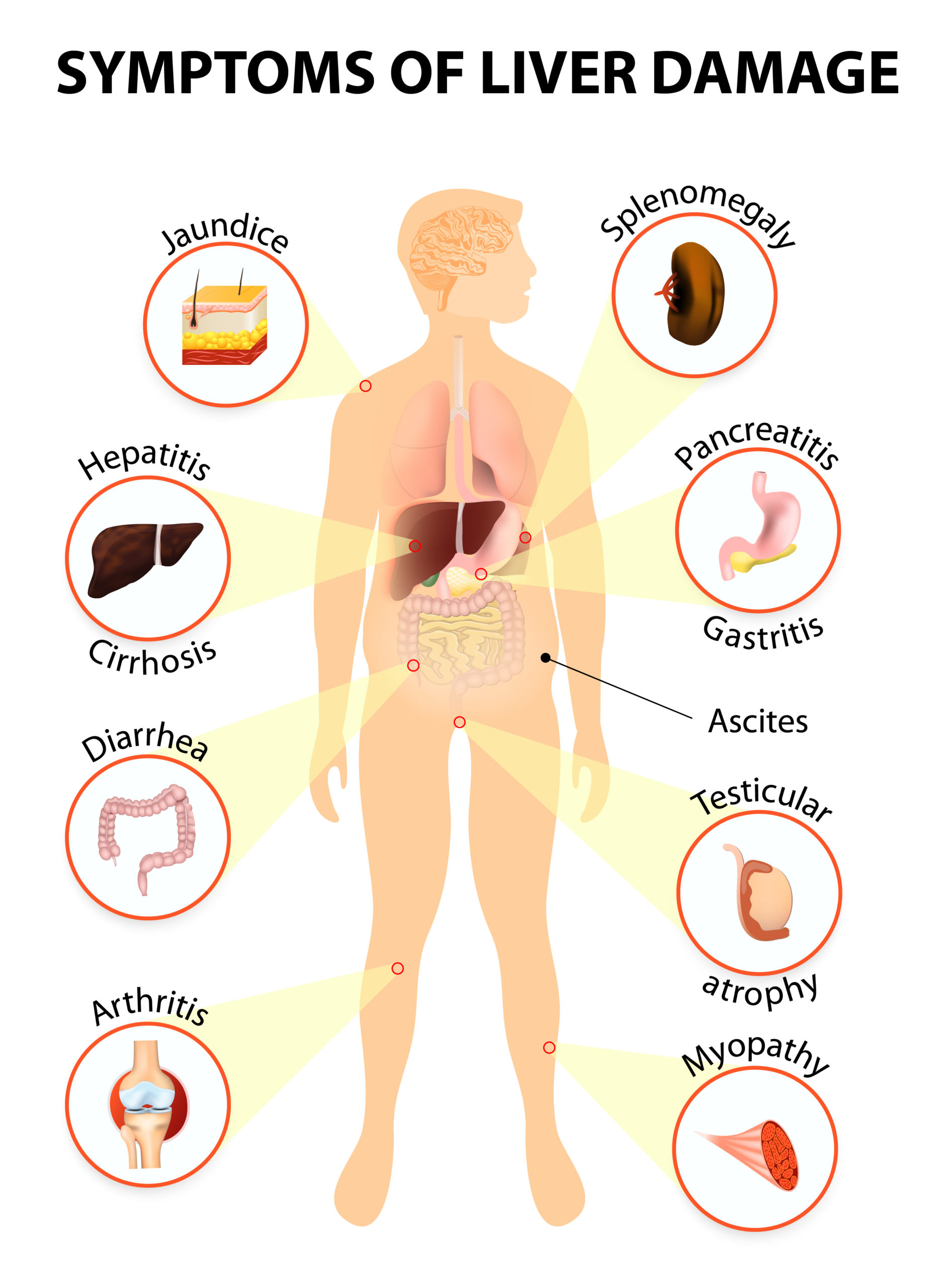
Jaundice (yellowing of the skin and eyes)
Dark urine
Pale stools
Advanced Symptoms
Ascites (fluid buildup in the abdomen)
Hepatic encephalopathy (confusion, disorientation, and coma)
Bleeding disorders
Kidney failure
Increased susceptibility to infections
Easy bruising
Swelling in the legs (edema)
Diagnosis of Liver Failure
Diagnosing liver failure involves a combination of:
Medical History and Physical Examination: Assessing symptoms and risk factors.
Blood Tests: Liver function tests, coagulation tests, and viral hepatitis screening.
Imaging Studies: Ultrasound, CT scan, or MRI to visualize the liver and assess its structure.
Liver Biopsy: A sample of liver tissue is taken for microscopic examination.
Assessment of Hepatic Encephalopathy: Mental status evaluation.
Management of Liver Failure
The management of liver failure depends on the cause and severity of the condition.
Acute Liver Failure Management
Supportive Care: Intensive care unit admission, monitoring vital signs, and providing supportive measures.
Treatment of Underlying Cause: Addressing the specific cause, such as acetaminophen overdose or viral hepatitis.
Liver Transplantation: In severe cases, a liver transplant may be necessary.
Chronic Liver Failure Management
Treatment of Underlying Cause: Managing the underlying cause, such as antiviral therapy for hepatitis B or C.
Management of Complications: Addressing complications such as ascites, hepatic encephalopathy, and bleeding disorders.
Lifestyle Modifications: Avoiding alcohol, maintaining a healthy diet, and managing underlying conditions such as diabetes.
Medications: To manage specific symptoms and complications.
Liver Transplantation: In advanced cases, a liver transplant may be the only option.
Liver Transplantation
Liver transplantation is a life-saving procedure for patients with end-stage liver disease. The procedure involves replacing the diseased liver with a healthy liver from a deceased or living donor.
Types of Liver Transplantation
Deceased Donor Liver Transplantation: A liver is obtained from a deceased individual who has donated their organs.
Living Donor Liver Transplantation: A portion of the liver is removed from a healthy living donor and transplanted into the recipient.
Post-Transplant Care
After a liver transplant, patients require lifelong immunosuppressant medications to prevent rejection of the new liver. Regular monitoring and follow-up care are essential.
Prevention of Liver Failure
Preventing liver failure involves:
Vaccination: Hepatitis A and B vaccines.
Safe Sex Practices: To prevent hepatitis B and C transmission.
Limiting Alcohol Consumption: To prevent alcoholic liver disease.
Maintaining a Healthy Weight: To prevent NAFLD and NASH.
Avoiding Exposure to Toxins: Such as poisonous mushrooms and industrial chemicals.
Responsible Medication Use: Following prescribed dosages and avoiding unnecessary medications.
Regular Checkups: Early detection and treatment of liver disease.
Prognosis
The prognosis of liver failure varies depending on the cause and severity of the condition. Acute liver failure can be rapidly fatal, while chronic liver failure can progress slowly over many years. Early diagnosis and treatment are crucial for improving outcomes.
Conclusion
Liver failure is a serious and complex condition that requires prompt diagnosis and management. Understanding the causes, symptoms, and treatment options is essential for improving patient outcomes. Prevention through vaccination, lifestyle modifications, and responsible medication use is crucial for maintaining liver health. If you experience any symptoms of liver disease, it is essential to seek medical attention immediately.