
What is Vision insurance?
At its core, vision insurance is a wellness benefit designed to reduce your out-of-pocket costs for routine eye exams, prescription eyeglasses, contact lenses, and sometimes even discounts on procedures like LASIK. Think of it as a way to budget for your annual eye care needs rather than a safety net for a sudden medical crisis. Most plans have a low annual premium or a monthly fee, and in exchange, you get access to a network of eye doctors and a set amount of coverage for eyewear.
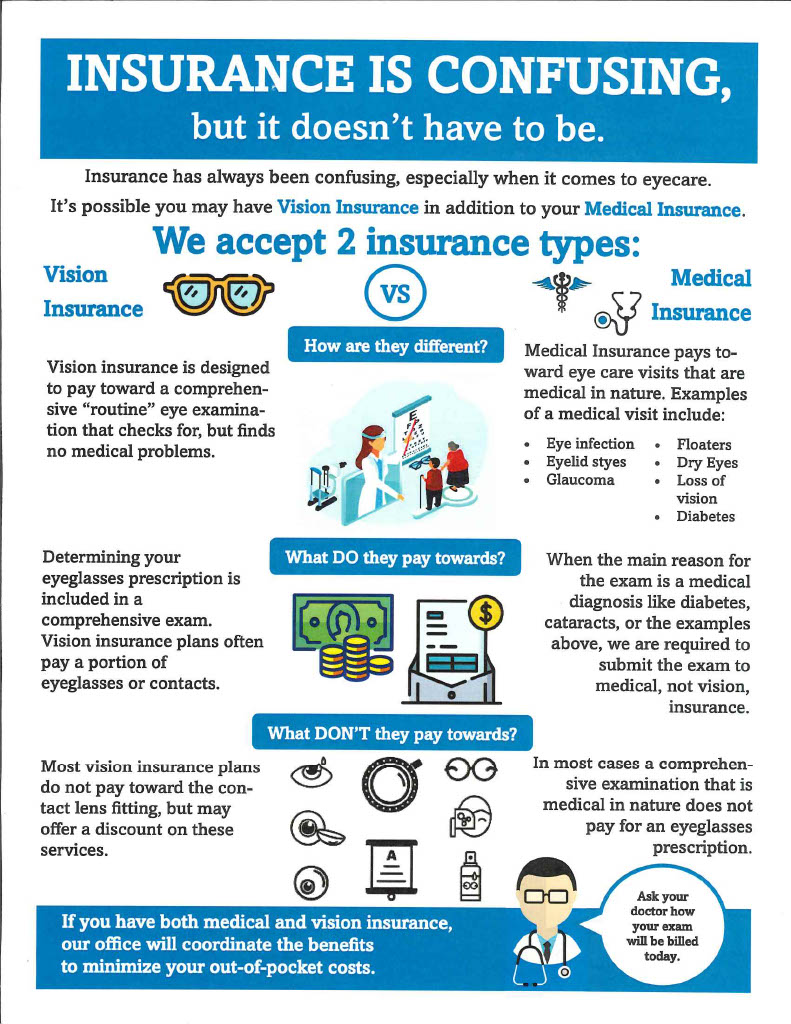
This model is fundamentally different from a medical plan. For instance, if you have a medical condition like glaucoma or a detached retina, your health insurance would typically cover the diagnosis and treatment, as these are considered medical events. Your vision plan, on the other hand, would cover the routine check-up that might discover these issues, but the subsequent medical treatment would fall under your health insurance.
—
How Vision Insurance Works
Most vision plans operate on a simple structure: a premium, a copay, and an allowance.
Premium: This is the monthly or annual fee you pay to have the insurance. It’s the cost of being enrolled in the plan.
Some plans may also use a deductible, which is the amount you have to pay before the insurance company starts to cover costs. However, this is less common with vision plans and is more typical of major medical insurance.
A key thing to remember is that most vision plans have a frequency limit. This means they’ll cover things like one eye exam per year, one pair of frames every two years, and contacts every year. These limits are designed to make the plans sustainable and affordable.
—
Is Vision Insurance Worth It?
The million-dollar question: is it worth the cost? For most people, the answer is a resounding yes. Even if you don’t wear glasses or contacts, an annual eye exam is a crucial part of your overall health. Eye doctors can detect serious health conditions like diabetes, high blood pressure, and even certain brain tumors just by looking at the blood vessels in your eyes. The cost of a single eye exam often exceeds the total annual premium for a basic vision plan.
If you wear glasses or contacts, the value becomes even clearer. A single pair of prescription glasses can easily cost hundreds of dollars, and contact lenses aren’t cheap either. The savings you get from the plan’s allowances and discounts can easily outweigh the annual premium. It’s essentially a way to save money on something you’ll likely be buying anyway.
Consider this: let’s say a basic vision plan costs $10 per month, or $120 per year. An eye exam without insurance might cost $100. A pair of new glasses with a basic frame and lenses could be $150. Your total out-of-pocket cost without insurance would be $250. With insurance, you might pay the $120 premium, a $15 copay for the exam, and let’s say the plan gives you a $130 allowance for glasses. You might then pay just $20 out of pocket for the glasses. Your total cost with insurance would be $155, saving you a substantial $95. This is a simplified example, but it illustrates the potential for savings.
—
Choosing the Right Vision Plan
When you’re shopping for a vision plan, you’ll likely encounter a few different types, most commonly PPO (Preferred Provider Organization) and HMO (Health Maintenance Organization) plans.
PPO Plans: These plans offer more flexibility. You can see any eye doctor you want, but you’ll save money by staying within the plan’s network of preferred providers. If you go outside the network, the plan will still cover some of the cost, but at a lower rate. This is a great option if you have a specific eye doctor you love and want the freedom to keep seeing them.
Beyond the type of plan, you should also look at the specific benefits offered. Check the allowances for frames and contact lenses, the frequency limits, and any discounts on lens upgrades or specialty services. Don’t just look at the premium; calculate your potential total cost based on your needs. For instance, if you get a new pair of glasses every year, a plan with an annual frame allowance might be a better fit than one that only offers a new pair every two years.
—
Vision Insurance and LASIK
Many people are curious if vision insurance covers LASIK or other vision correction surgeries. While a few plans offer some coverage, it’s not the norm. Most vision plans are designed for routine care and eyewear, not surgical procedures. However, what you’ll often find is that many plans offer a discount on LASIK. This means you’ll pay a reduced rate for the surgery if you use one of the plan’s in-network surgeons. This can still lead to significant savings on a procedure that can cost thousands of dollars.
It’s important to read the fine print of any vision plan if you’re considering LASIK. Don’t assume that just because you have vision insurance, you’ll be covered. Look for specific language about surgical discounts and the providers who participate.
Common Misconceptions About Vision Insurance
It’s easy to get confused about what vision insurance does and doesn’t cover. Here are a few common misconceptions:
“Vision insurance covers everything related to my eyes.” False. As mentioned earlier, it’s primarily for routine care and eyewear. Medical conditions of the eye, like infections, injuries, or chronic diseases, are covered by your regular health insurance.
:max_bytes(150000):strip_icc()/Life-Insurance-a8aee8e3024145a8b454ea19df030418.png?resize=200,135&ssl=1 "A Guide To Understanding Life Insurance")

:max_bytes(150000):strip_icc()/GettyImages-1328171458-5b2c06f6aaf241388c8718208fb65540.jpg?resize=200,135&ssl=1 "Your Guide To Understanding Car Insurance")
