Navigating Life insurance for Seniors: A Comprehensive Guide
Life insurance, often perceived as a young person’s concern, becomes increasingly relevant as we age. For seniors, it’s less about replacing future income and more about safeguarding legacies, covering final expenses, and ensuring loved ones are financially secure. This comprehensive guide delves into the nuances of life insurance for seniors, exploring the available options, considerations, and strategies to make informed decisions.
Understanding the Shifting Landscape of Senior Life Insurance
The needs and priorities of seniors differ significantly from those of younger individuals. While younger people may focus on income replacement and mortgage protection, seniors typically prioritize:
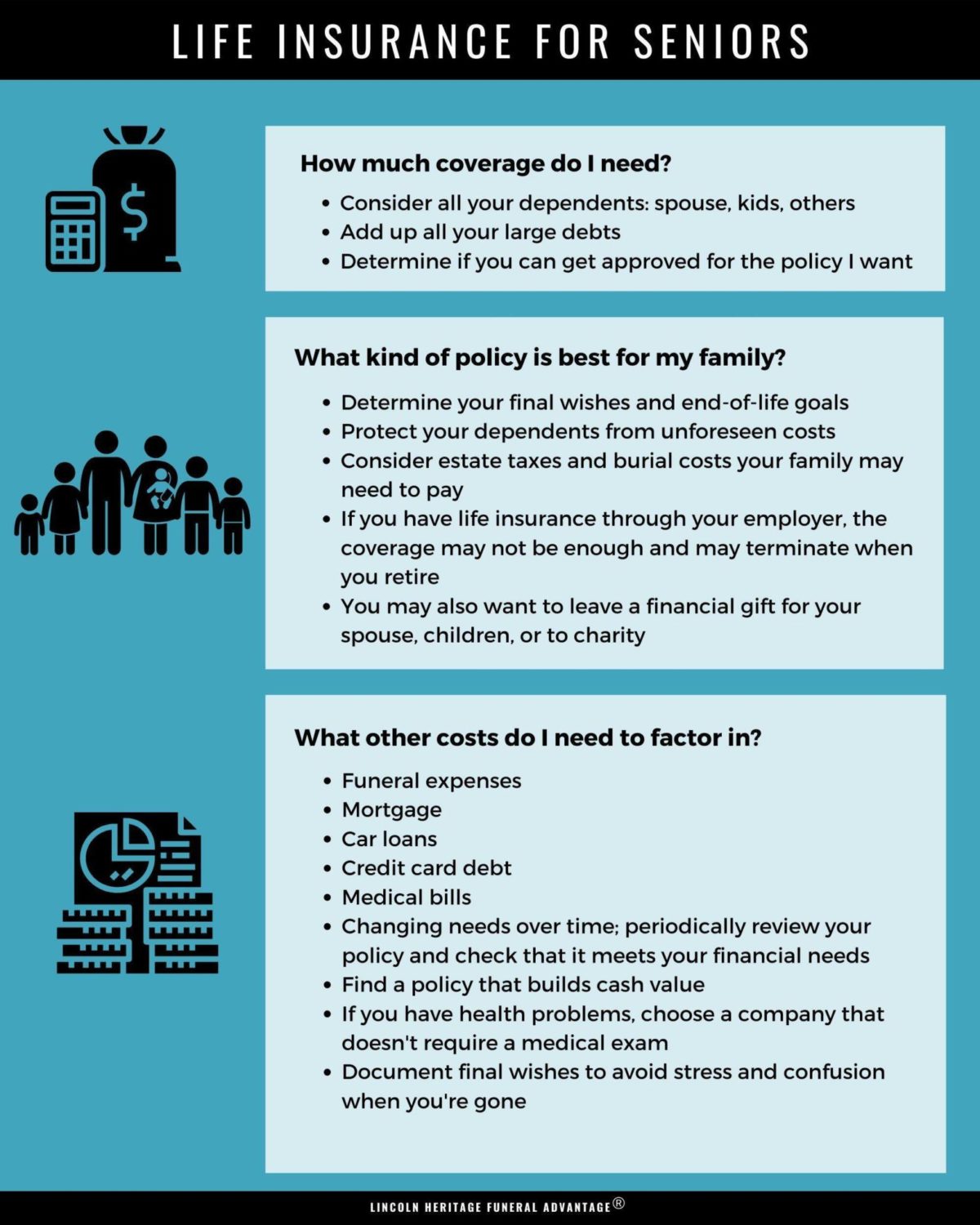
Best Life Insurance Plan For Seniors Lincoln Heritage
Final Expense Coverage: Covering funeral costs, medical bills, and other end-of-life expenses.
Legacy Planning: Leaving a financial inheritance for children, grandchildren, or charitable organizations.
Estate Tax Planning: Providing funds to pay estate taxes and prevent the forced sale of assets.
Supplementing Retirement Income: In some cases, using life insurance to create a supplemental income stream.
Types of Life Insurance Policies for Seniors
Understanding the different types of life insurance policies is crucial for selecting the right fit. Here’s a breakdown of common options for seniors:
Term Life Insurance
Understanding Life Insurance Options for Seniors Fidelity Life
Term life insurance provides coverage for a specific period, typically 10, 15, or 20 years.
It’s generally more affordable than permanent life insurance, especially for shorter terms.
However, coverage expires at the end of the term, and premiums tend to increase with age.
Considerations for Seniors: Term life insurance might be suitable for seniors with short-term financial obligations or those seeking temporary coverage for specific needs. It’s less ideal for long-term legacy planning.
It is less likely to be offered to seniors over a certain age.
Whole Life Insurance
Whole life insurance offers lifelong coverage with a fixed premium.
It includes a cash value component that grows over time, providing a potential source of funds.
Premiums are typically higher than term life insurance.
Considerations for Seniors: Whole life insurance can be beneficial for seniors seeking lifelong coverage and a guaranteed death benefit. The cash value component can also serve as a financial asset.
The cash value growth is slow, and fees can be high.
Guaranteed Issue Life Insurance
Why Do Seniors Need Life Insurance? – The Family Security Plan®
Guaranteed issue life insurance requires no medical exam or health questions.
Coverage is guaranteed, regardless of health conditions.
Death benefits are typically lower than other types of policies.
Premiums are generally higher due to the increased risk for insurers.
Considerations for Seniors: Guaranteed issue life insurance is a viable option for seniors with serious health conditions who may not qualify for other policies. It’s often used for final expense coverage.
Often has a graded death benefit, where the full death benefit is not payable until a certain period of time has passed.
Simplified Issue Life Insurance
Simplified issue life insurance requires minimal health questions, but no medical exam.
Coverage is not guaranteed, and insurers may decline applicants based on health information.
Death benefits are typically higher than guaranteed issue policies.
Premiums
Considerations for Seniors: Simplified issue life insurance offers a balance between guaranteed acceptance and affordability. It’s suitable for seniors with minor health issues.
Final Expense Insurance
Final expense insurance, also known as burial insurance, is specifically designed to cover funeral costs and other end-of-life expenses.
Death benefits are typically lower, ranging from $5,000 to $25,000.
Policies are often easier to qualify for, with fewer medical questions.
Considerations for Seniors: Final expense insurance provides peace of mind by ensuring that loved ones are not burdened with unexpected expenses.
Key Factors to Consider When Choosing Life Insurance
Several factors influence the suitability and affordability of life insurance for seniors:
Age and Health
Age and health significantly impact premium rates and eligibility.
Older seniors and those with health conditions may face higher premiums or limited coverage options.
It is important to be truthful about health conditions during the application process.
Financial Needs
Determine the specific financial needs that life insurance will address.
Calculate final expenses, estate taxes, and the desired legacy amount.
Consider any outstanding debts or financial obligations.
Budget
Assess the affordability of premiums and the long-term cost of the policy.
Compare quotes from multiple insurers to find the best value.
Determine if the cash value of a whole life policy is beneficial, considering the higher premium cost.
Insurer Reputation and Financial Strength
Choose a reputable insurer with a strong financial rating.
Research the insurer’s customer service and claims processing record.
Reading reviews, and checking with state insurance boards are good ideas.
Policy Features and Riders
Review the policy’s terms and conditions, including any exclusions or limitations.
Consider adding riders, such as an accelerated death benefit rider, which allows access to a portion of the death benefit for medical expenses.
Ensure you fully understand the fees, and cash value implications of any policy you consider.
Strategies for Seniors Seeking Life Insurance
Start Early
The earlier you purchase life insurance, the lower the premiums will be.
Consider purchasing coverage during your 50s or early 60s to secure more favorable rates.
Compare Multiple Quotes
Obtain quotes from several insurers to compare premiums and coverage options.
Use online comparison tools or work with an independent insurance agent.
Being informed on pricing from many companys helps make good decisons.
Consider a Medical Exam
Although guaranteed issue policies are available, a medical exam may result in lower premiums for those in relatively good health.
Weigh the pros and cons of a medical exam based on your health status.
Review Your Policy Regularly
Life insurance needs may change over time, so review your policy periodically.
Update beneficiary designations and adjust coverage amounts as needed.
As circumstances change, insurance needs also change.
Work With a Financial Advisor
A financial advisor can help assess your needs, compare policies, and make informed decisions.
An advisor can also help integrate life insurance into your overall financial plan.
Be sure to work with an advisor that puts your needs first.
Conclusion
Life insurance for seniors plays a crucial role in safeguarding legacies, covering final expenses, and providing financial security for loved ones. By understanding the available policy options, considering key factors, and implementing effective strategies, seniors can make informed decisions and ensure peace of mind for themselves and their families. Taking the time to properly investigate the policy that best matches your needs is a sound financial choice.