
Navigating the Realm of Elevated Red Blood Cell Counts: A Comprehensive Guide
An elevated red blood cell count, medically termed erythrocytosis or polycythemia, signifies an increase in the number of red blood cells (erythrocytes) circulating in the bloodstream. While red blood cells are essential for oxygen transport throughout the body, an overabundance can lead to various complications. This comprehensive guide delves into the intricacies of high red blood cell counts, exploring its causes, symptoms, diagnosis, and management.
Red blood cells are the most abundant cells in the blood, responsible for carrying oxygen from the lungs to tissues and organs. They contain hemoglobin, an iron-rich protein that binds to oxygen. The production of red blood cells is regulated by a hormone called erythropoietin (EPO), primarily produced by the kidneys. When oxygen levels in the blood are low, the kidneys release EPO, stimulating the bone marrow to produce more red blood cells.
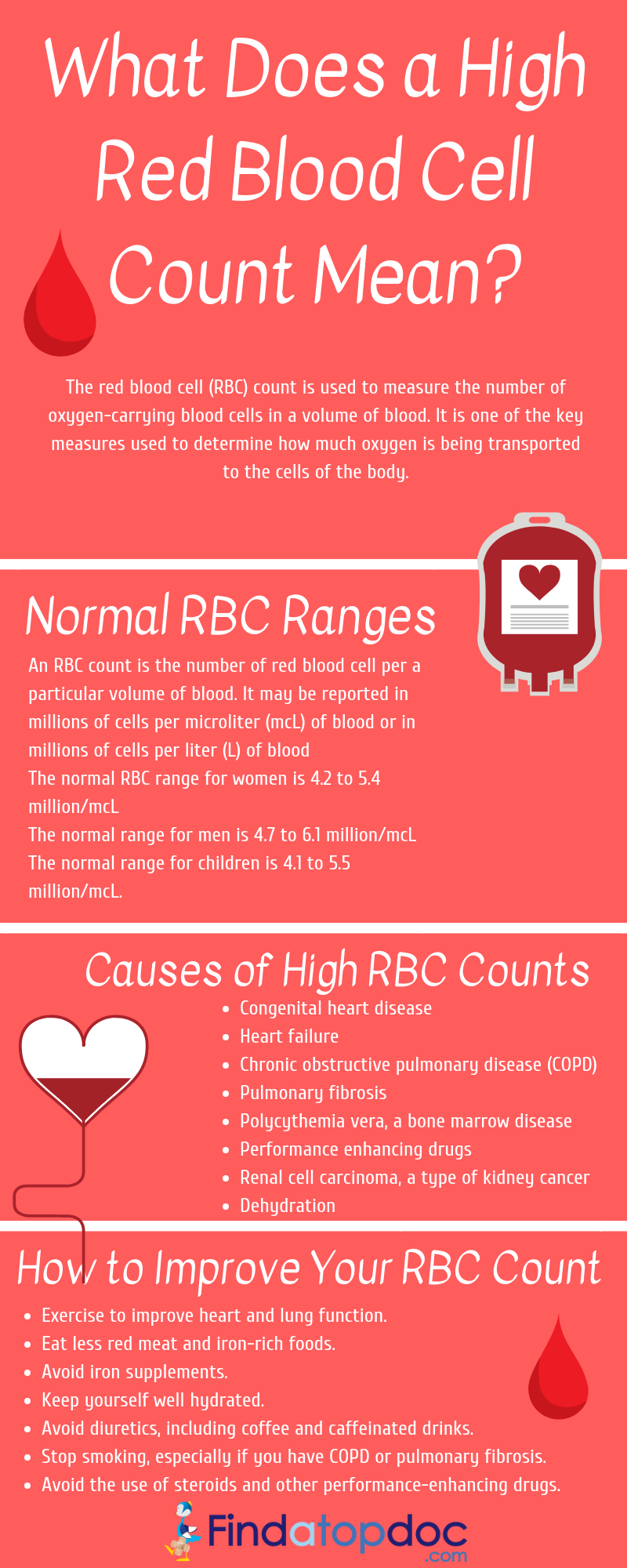
A high red blood cell count is generally defined as:
Men: Red blood cell count above 5.7 million cells per microliter (mcL)
These values can vary slightly depending on the laboratory and the specific testing method used.

Erythrocytosis can be broadly classified into two categories:
Relative Erythrocytosis
Relative erythrocytosis occurs when the red blood cell count appears elevated due to a decrease in plasma volume, the liquid component of blood. This can result from dehydration, excessive sweating, or diuretic use. In relative erythrocytosis, the actual number of red blood cells remains normal, but their concentration increases due to the reduced fluid volume.
:max_bytes(150000):strip_icc()/VWH_Illustration_Red-Blood-Cell-Count-RBC-Test-Results_Less-Text_Final-5bdae75fab644d31824709c60394d2a6.jpg "image.title")
Absolute Erythrocytosis
Absolute erythrocytosis, on the other hand, involves a genuine increase in the total number of red blood cells. This can be further subdivided into:
Primary Erythrocytosis
Primary erythrocytosis arises from a problem within the bone marrow itself, leading to the overproduction of red blood cells. Polycythemia vera (PV) is the most common form of primary erythrocytosis, a rare blood disorder characterized by the uncontrolled production of red blood cells, white blood cells, and platelets.
Secondary Erythrocytosis
Secondary erythrocytosis occurs as a response to an underlying condition that stimulates the production of EPO. This can be caused by various factors, including:
Chronic lung diseases, such as chronic obstructive pulmonary disease (COPD) and sleep apnea
The symptoms of high red blood cell count can vary depending on the underlying cause and the severity of the condition. Some individuals may experience no symptoms at all, while others may develop a range of symptoms, including:
Headache
Understanding the root cause of an elevated red blood cell count is crucial for effective management.
Polycythemia Vera (PV)
PV is a myeloproliferative neoplasm, a type of blood cancer, characterized by the uncontrolled production of red blood cells, white blood cells, and platelets. It is often associated with a mutation in the JAK2 gene.
Chronic Lung Diseases
Chronic lung diseases, such as COPD and sleep apnea, can lead to chronic hypoxia (low oxygen levels), stimulating the kidneys to produce more EPO and subsequently increasing red blood cell production.
Congenital Heart Defects
Certain congenital heart defects can cause blood to bypass the lungs, resulting in chronic hypoxia and stimulating erythropoiesis.
Kidney Diseases
Kidney diseases, such as renal cell carcinoma and kidney cysts, can lead to the overproduction of EPO, resulting in secondary erythrocytosis.
High Altitude Living
Living at high altitudes, where oxygen levels are lower, can stimulate the production of EPO and increase red blood cell count.
Smoking
Smoking can lead to chronic hypoxia and stimulate erythropoiesis.
Certain Tumors
Some tumors, such as renal cell carcinoma and hepatocellular carcinoma, can produce EPO, leading to secondary erythrocytosis.
Dehydration
Dehydration can lead to relative erythrocytosis by decreasing plasma volume.
Performance Enhancing Drugs
The use of performance-enhancing drugs such as EPO, or anabolic steroids, can artificially increase red blood cell count.
Diagnosing high red blood cell count involves a combination of medical history, physical examination, and laboratory tests.
Complete Blood Count (CBC)
A CBC is a common blood test that measures the number of red blood cells, white blood cells, and platelets in the blood.
Erythropoietin (EPO) Level
Measuring EPO levels can help differentiate between primary and secondary erythrocytosis.
Bone Marrow Biopsy
A bone marrow biopsy may be performed to examine the bone marrow and identify any abnormalities.
Genetic Testing
Genetic testing, such as JAK2 mutation analysis, may be performed to diagnose PV.
Imaging Studies
Imaging studies, such as chest X-rays and abdominal ultrasounds, may be performed to identify underlying conditions, such as lung or kidney diseases.
The management of high red blood cell count depends on the underlying cause and the severity of the condition.
Phlebotomy
Phlebotomy, the removal of blood, is a common treatment for PV and other forms of erythrocytosis. It helps to reduce the number of red blood cells and alleviate symptoms.
Medications
Medications, such as hydroxyurea and interferon alfa, may be used to suppress bone marrow activity and reduce red blood cell production in PV. Low dose aspirin is also often prescribed to reduce clotting risk.
Treating Underlying Conditions
Treating underlying conditions, such as chronic lung diseases or kidney diseases, can help to resolve secondary erythrocytosis.
Lifestyle Modifications
Lifestyle modifications, such as staying hydrated, avoiding smoking, and maintaining a healthy weight, can help to manage erythrocytosis.
Untreated high red blood cell count can lead to various complications, including:
Blood Clots
An increased number of red blood cells can thicken the blood, increasing the risk of blood clots.
Stroke
Blood clots can travel to the brain, causing a stroke.
Heart Attack
Blood clots can block blood flow to the heart, causing a heart attack.
Pulmonary Embolism
Blood clots can travel to the lungs, causing a pulmonary embolism.
Gout
High red blood cell count can lead to increased uric acid production, which can cause gout.
Bleeding
In rare cases, PV can lead to bleeding complications.
The prognosis for high red blood cell count depends on the underlying cause and the effectiveness of treatment. With appropriate management, individuals with erythrocytosis can often lead normal, healthy lives.
High red blood cell count is a complex condition with various underlying causes. Early diagnosis and appropriate management are crucial for preventing complications and improving outcomes. If you experience any symptoms of high red blood cell count, it is essential to consult with a healthcare professional for evaluation and treatment.


