The Multifaceted Marvel: Unveiling the Comprehensive Benefits of Vitamin B6
Vitamin B6, also known as pyridoxine, is an essential water-soluble vitamin that plays a crucial role in numerous bodily functions. It’s a key player in everything from brain development and immune function to red blood cell formation and metabolism. This article delves into the extensive benefits of vitamin B6, exploring its various forms, functions, and the implications of both deficiency and adequate intake.
Understanding the Forms and Functions of Vitamin B6
Vitamin B6 isn’t a single entity but a group of six related compounds, including pyridoxine, pyridoxal, and pyridoxamine, along with their phosphorylated forms. These compounds are converted into pyridoxal 5′-phosphate (PLP), the active coenzyme form, which participates in over 100 enzyme reactions in the body.
The Benefits of Vitamin B Fullscript
Key Roles of Vitamin B6:
Protein Metabolism:
B6 is essential for the metabolism of amino acids, the building blocks of proteins. It’s involved in transamination, the transfer of amino groups between amino acids, and deamination, the removal of amino groups. This is vital for protein synthesis, breakdown, and utilization.
Red Blood Cell Formation:
Vitamin B6 is crucial for the synthesis of hemoglobin, the protein in red blood cells that carries oxygen throughout the body. Adequate B6 levels are essential for preventing anemia.
Neurotransmitter Synthesis:
B6 plays a vital role in the synthesis of several neurotransmitters, including serotonin, dopamine, norepinephrine, and gamma-aminobutyric acid (GABA). These neurotransmitters are essential for mood regulation, cognitive function, and sleep.
Immune System Function:
B6 supports a healthy immune system by contributing to the production of lymphocytes, a type of white blood cell that fights infections.
Brain Development and Function:
B6 is crucial for brain development during pregnancy and infancy. It also supports cognitive function and may play a role in preventing age-related cognitive decline.
Glucose Metabolism:
B6 is involved in gluconeogenesis, the process of producing glucose from non-carbohydrate sources. It also helps regulate blood sugar levels.
Hormone Regulation:
B6 can influence hormone receptors, and therefore influence the effects of some hormones.
Health Benefits of Adequate Vitamin B6 Intake:
1. Mood Regulation and Mental Health
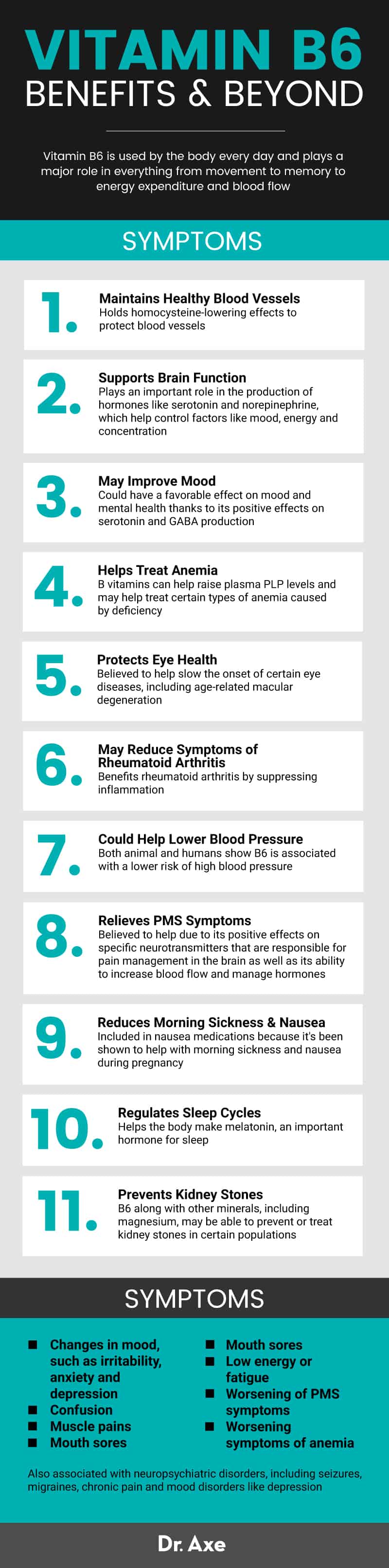
Vitamin B6’s role in neurotransmitter synthesis makes it essential for mood regulation. Studies suggest that adequate B6 levels may help alleviate symptoms of depression and anxiety.
It can help with symptoms of PMS, particularly mood related symptoms.
Some studies indicate that adequate B6 may help improve cognitive function and reduce the risk of cognitive decline in older adults.
2. Cardiovascular Health
Vitamin B Benefits, Uses, Deficiency, Dosage and More – Dr. Axe
B6 may help lower homocysteine levels, an amino acid linked to an increased risk of heart disease.
By supporting red blood cell production, B6 helps ensure adequate oxygen delivery to the heart and other tissues.
3. Anemia Prevention
B6 is essential for hemoglobin synthesis, preventing iron deficiency anemia and other forms of anemia.
4. Immune System Support
Adequate B6 levels bolster immune function, enhancing the body’s ability to fight off infections.
5. Nausea Relief During Pregnancy
Vitamin B6, often in combination with doxylamine, is a common treatment for nausea and vomiting during pregnancy.
6. Eye Health
Some research indicates that B6, in combination with other vitamins, may help reduce the risk of age-related macular degeneration (AMD).
7. Reduction of Inflammation
B6 has shown some anti-inflammatory properties.
8. Carpal Tunnel Syndrome
While research is mixed, some studies suggest that B6 supplementation may help alleviate symptoms of carpal tunnel syndrome.
Vitamin B6 Deficiency: Causes, Symptoms, and Risks
Vitamin B6 deficiency can occur due to inadequate dietary intake, malabsorption, certain medications, and chronic diseases.
Causes of Deficiency:
Poor dietary intake of B6-rich foods.
Malabsorption syndromes, such as Crohn’s disease and celiac disease.
Alcoholism, which impairs B6 absorption and utilization.
Certain medications, such as isoniazid, penicillamine, and corticosteroids.
Kidney disease, which can lead to increased B6 excretion.
Symptoms of Deficiency:
Anemia (microcytic anemia)
Skin rashes and dermatitis
Cracked lips and corners of the mouth (cheilosis)
Swollen tongue (glossitis)
Depression, anxiety, and irritability
Confusion and cognitive impairment
Weakened immune system
Peripheral neuropathy (nerve damage) causing tingling, numbness, and pain in the hands and feet.
Seizures, particularly in infants.
Risks of Deficiency:
Increased risk of heart disease due to elevated homocysteine levels.
Increased susceptibility to infections due to weakened immune function.
Neurological problems, including peripheral neuropathy and cognitive decline.
Anemia, leading to fatigue and weakness.
Dietary Sources of Vitamin B6
Vitamin B6 is found in a variety of foods, including:
1. Animal Products
Poultry (chicken, turkey)
Beef
Fish (tuna, salmon)
Pork
Eggs
2. Plant-Based Foods
Chickpeas
Potatoes (especially sweet potatoes)
Bananas
Fortified cereals
Spinach
Avocado
Carrots
Brown Rice
Sunflower Seeds
Walnuts
Vitamin B6 Supplementation: Considerations and Precautions
While a balanced diet is the best way to obtain adequate B6, supplementation may be necessary in certain cases, such as during pregnancy, for individuals with malabsorption syndromes, or for those taking medications that interfere with B6 metabolism.
Dosage and Safety:
The recommended daily allowance (RDA) for vitamin B6 varies depending on age, sex, and life stage.
High doses of B6 (above 100 mg per day) can lead to peripheral neuropathy, characterized by nerve damage causing tingling, numbness, and pain in the hands and feet.
It’s essential to consult with a healthcare professional before taking B6 supplements, especially if you have any underlying health conditions or are taking other medications.
Interactions with Medications:
B6 can interact with certain medications, including:
Isoniazid (INH), a tuberculosis medication.
Penicillamine, used to treat rheumatoid arthritis and Wilson’s disease.
Levodopa, used to treat Parkinson’s disease.
Certain anticonvulsants.
Conclusion
Vitamin B6 is a vital nutrient that plays a multifaceted role in maintaining optimal health. From supporting brain function and immune health to preventing anemia and regulating mood, its benefits are extensive. Ensuring adequate B6 intake through a balanced diet or, when necessary, supplementation, is crucial for overall well-being. However, it is always recommended to consult with a healthcare professional before starting any supplement regimen.